Biotechnology Projects
SI03 · Scientific Research & Innovation
Connect biology, evidence and responsible innovation to investigate a problem that matters.
Explore living systems. Develop useful ideas.
Use biology to investigate a problem in health, agriculture, food or the environment. Your team might study a biological process, analyse a public dataset, develop a sensing idea or model a way to improve an existing application.
A project can be experimental or computational. What matters is a clear question, an appropriate method and evidence you can explain. At the competition, present your approach and results, identify your own contribution and discuss what you still do not know.
The jury considers scientific quality, originality, usefulness and responsible research. A laboratory is not required for every valid project, and preliminary findings must not be presented as proven medical treatments. Follow the biosafety, ethics and evidence requirements in the official rulebook.
Thematic Focus Areas
These are examples, not a closed list. Choose a focused problem and evidence appropriate to your project and competition level.
Health and biomedical research
Investigate biological data, sensing methods or biomedical concepts with suitable validation. Preliminary or computational results must not be presented as proven diagnosis or treatment.
Agriculture and food
Explore biological approaches to food, crops or agricultural sustainability. Select a focused question and a responsible, age-appropriate method.
Environment and biological processes
Investigate biological systems that address environmental or processing challenges. Computational analysis and validated modelling can be suitable alternatives to laboratory work.
Participation Rules
Develop an original student contribution and support its claims with suitable evidence.
Scientific method and evidence
Define a question, select an appropriate method, record reliable results and explain controls, comparisons and limitations where relevant.
Biosafety and ethics
Follow the rulebook’s approval, containment and ethical requirements. Safety compliance is an entry requirement, not an optional way to gain points.
Student contribution and honest claims
Declare outside support and identify the work done by students. Distinguish observations, model predictions and preliminary findings from established real-world effectiveness.
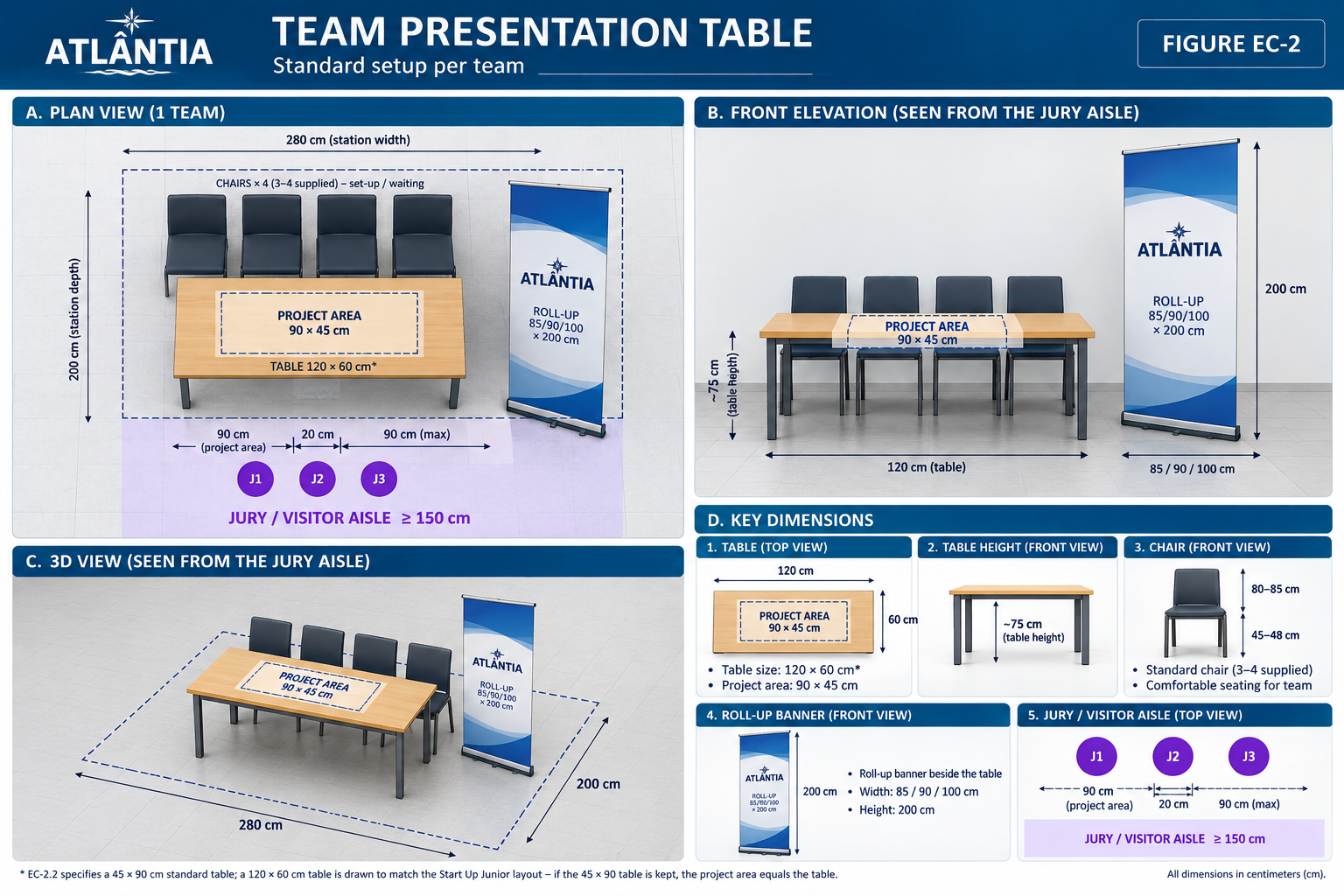
Project Presentation Area
Evaluation Criteria
The common Scientific Research & Innovation rubric totals 100 points. Expected technical depth follows the registered level.
Competition Process
Make the connection from problem to method, evidence, result and impact clear.
Prepare an evidence-based project
Document the question, background, method, results and your own contribution. Prepare the report and supporting evidence specified by the rulebook and announced submission schedule.
Present, demonstrate and discuss
Give a 3–5 minute main presentation. Explain the project, show its evidence and answer the jury’s questions; the jury may extend the discussion. Technical depth is assessed at your registered level.
Levels 01–07 • 3–5 minute main presentation • Maximum 100 points
Competition Rules & Guidelines
Review the official competition rules, evaluation criteria, project requirements and submission guidelines before preparing your project.
Participation implies acceptance of the official rulebook. All teams, mentors, and students are expected to read, understand, and comply with the rules.