Leave parking and load
The robot leaves P autonomously and reaches Loading. Human interaction begins only after a valid station arrival, a stop lasting at least two seconds, RED status and referee authorisation.
Recognise the signs, communicate the destination and deliver across a miniature city.
Your team runs a miniature delivery service. The robot leaves its parking area, collects cargo and travels between city stations by recognising the road signs and destination commands. A visible RGB light tells the referee what the robot has understood and what it is doing.
The delivery chain links Loading, B, A and C before a return to parking. At legal station stops, students unload and load cargo and present the next destination. Between stations the robot moves autonomously, so students cannot steer it by voice, gestures or electronic controls.
This challenge rewards a clear partnership between people and an autonomous system. Smooth driving alone is not enough: the robot has to recognise information, show the correct status, stop safely and bring each cargo to its intended destination. Mission completion matters before speed.
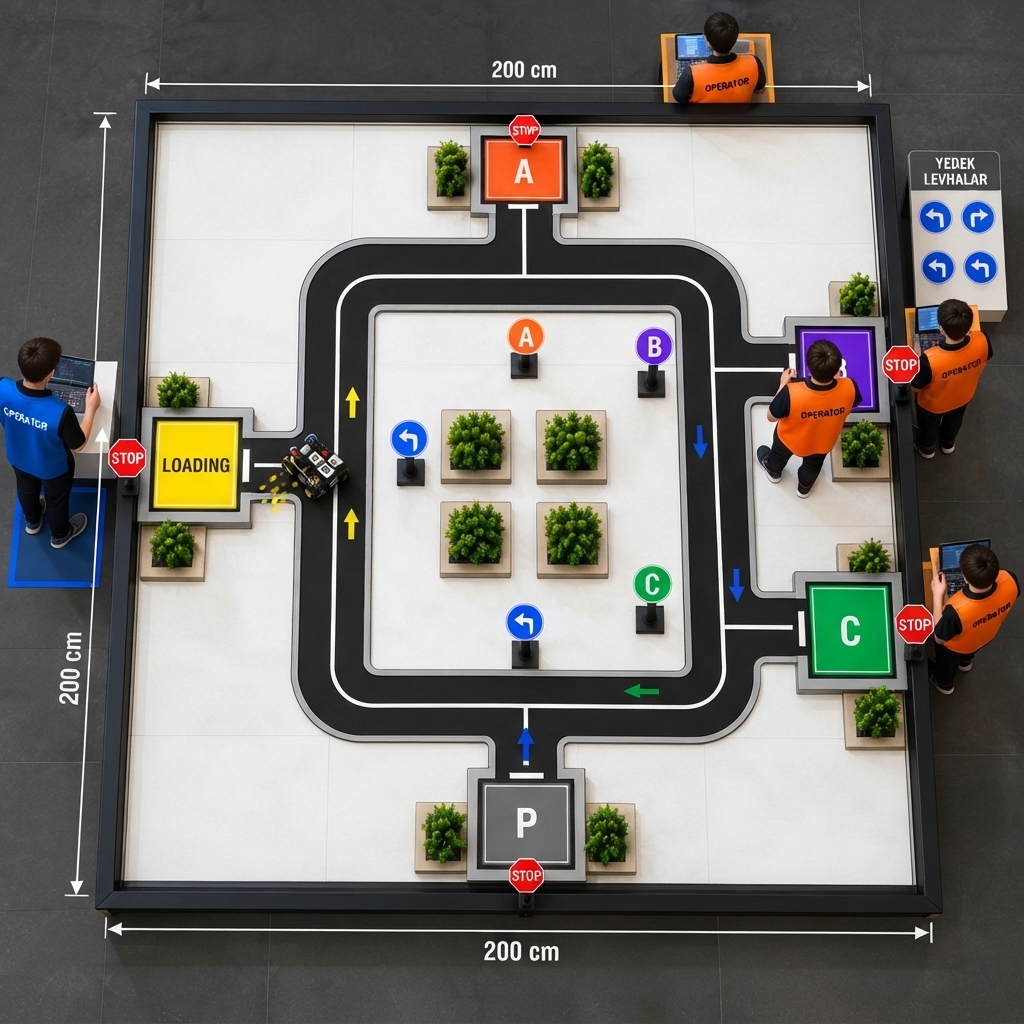
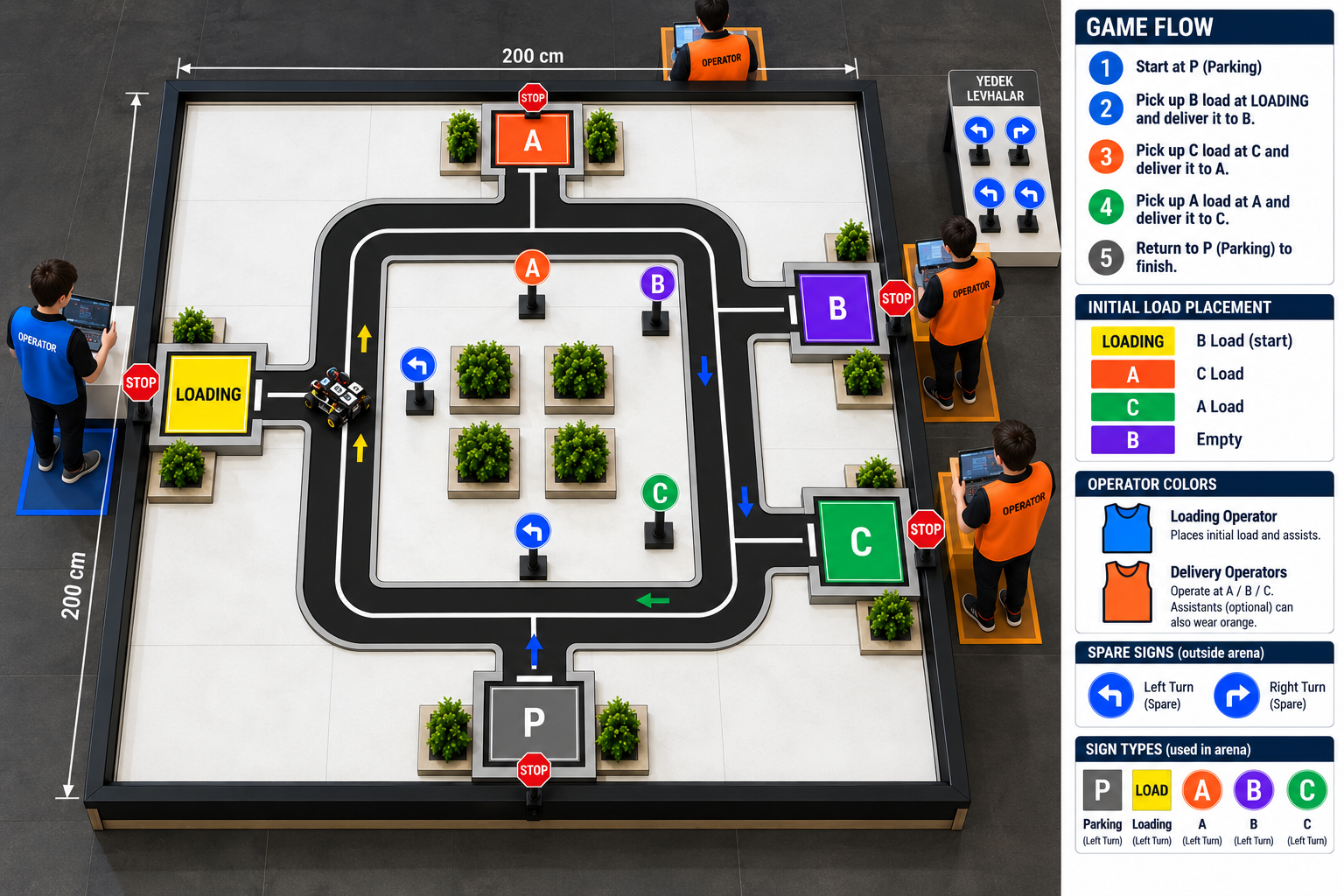
The robot leaves P autonomously and reaches Loading. Human interaction begins only after a valid station arrival, a stop lasting at least two seconds, RED status and referee authorisation.
Students load B cargo and show the B destination. The robot displays the destination status, obeys the LEFT/RIGHT signs and travels autonomously to B.
At B unload B cargo and load A cargo; at A unload A cargo and load C cargo. Students may perform only the authorised station interactions. They cannot change signs while the robot is moving.
After unloading C cargo, show P/HOME. The robot returns to P, completes parking and signals WHITE. The clock includes every loading, recognition and recovery action.
| Task | Points |
|---|---|
| P to Loading | Up to 10 |
| Delivery to B | Up to 25 |
| Delivery to A | Up to 25 |
| Delivery to C | Up to 25 |
| Return to P | Up to 15 |
| One run / best two combined | 100 / 200 maximum |
Scores distinguish destination recognition with correct RGB, sign execution, station entry, legal STOP and cargo delivery. Touching a boundary alone is not legal cargo arrival. Full and partial entry scores are alternatives. The two best net runs are added; ties first consider fewer recoveries, more completed deliveries and more full entries before later rulebook criteria.
RGB states are RED for STOP, YELLOW for Loading, GREEN for B, ORANGE for A, BLUE for C and WHITE for P/HOME. These status colours are not the station background colours.
Station operators may load, unload, rotate/orient the stopped robot and present approved commands only after the legal-stop conditions and referee permission. The robot cannot be carried along the route, reprogrammed or recalibrated during a run.
Every run must be recorded by the team. No external electronic driving or physical/verbal steering is allowed during movement. Students review the score with the referee; mentors may not enter or give tactical assistance during a run.
Rehearse the full cargo chain, visible RGB states and a repeatable two-second stop. Check what counts as full station entry and practise the Recovery Card procedure. All participants and mentors must read and follow the official rulebook.
Review the official competition rules, evaluation criteria, project requirements and submission guidelines before preparing your project.