Autonomous Drone
DR01 · Future Drone Technologies
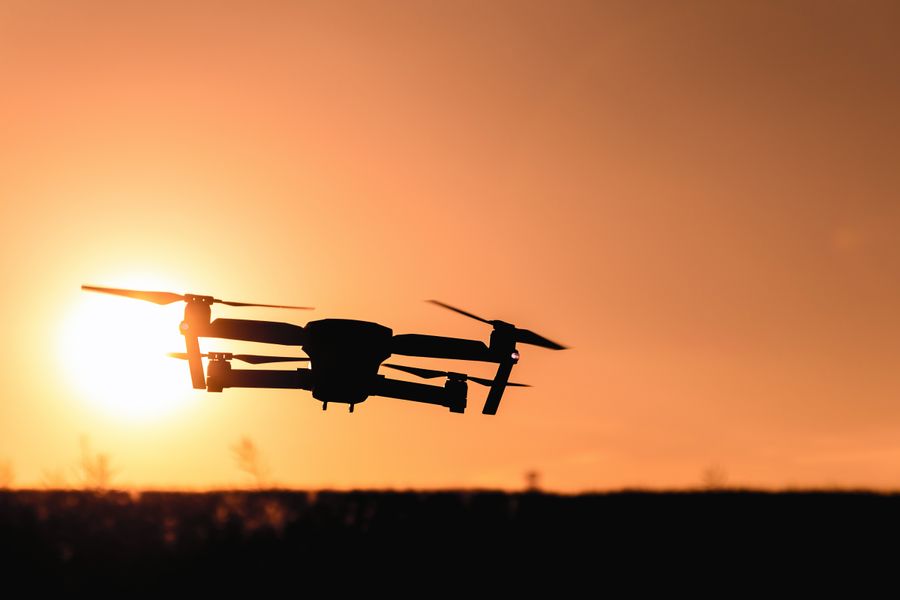
Develop a drone that follows a line, navigates gates and avoids obstacles without a pilot. Reliable sensing and flight control turn each clean circuit into a consecutive lap.
Read the course. Find your own way.
Imagine a drone that has to find its way around a course without a pilot steering it. Your team develops a flying robot that watches the line below, recognises the route and guides itself through the gates.
On competition day, the drone takes off and tries to complete a continuous sequence of clean laps. The challenge is to keep it moving confidently as the course changes what it needs to see and where it needs to fly. A fast drone only helps if it can stay on course.
Students bring together programming, sensing and flight control, then learn from each test to make the next flight more reliable. The technical sections below explain the course sequence, limits and scoring; read the official rulebook before preparing your entry.
Autonomous Drone Requirements
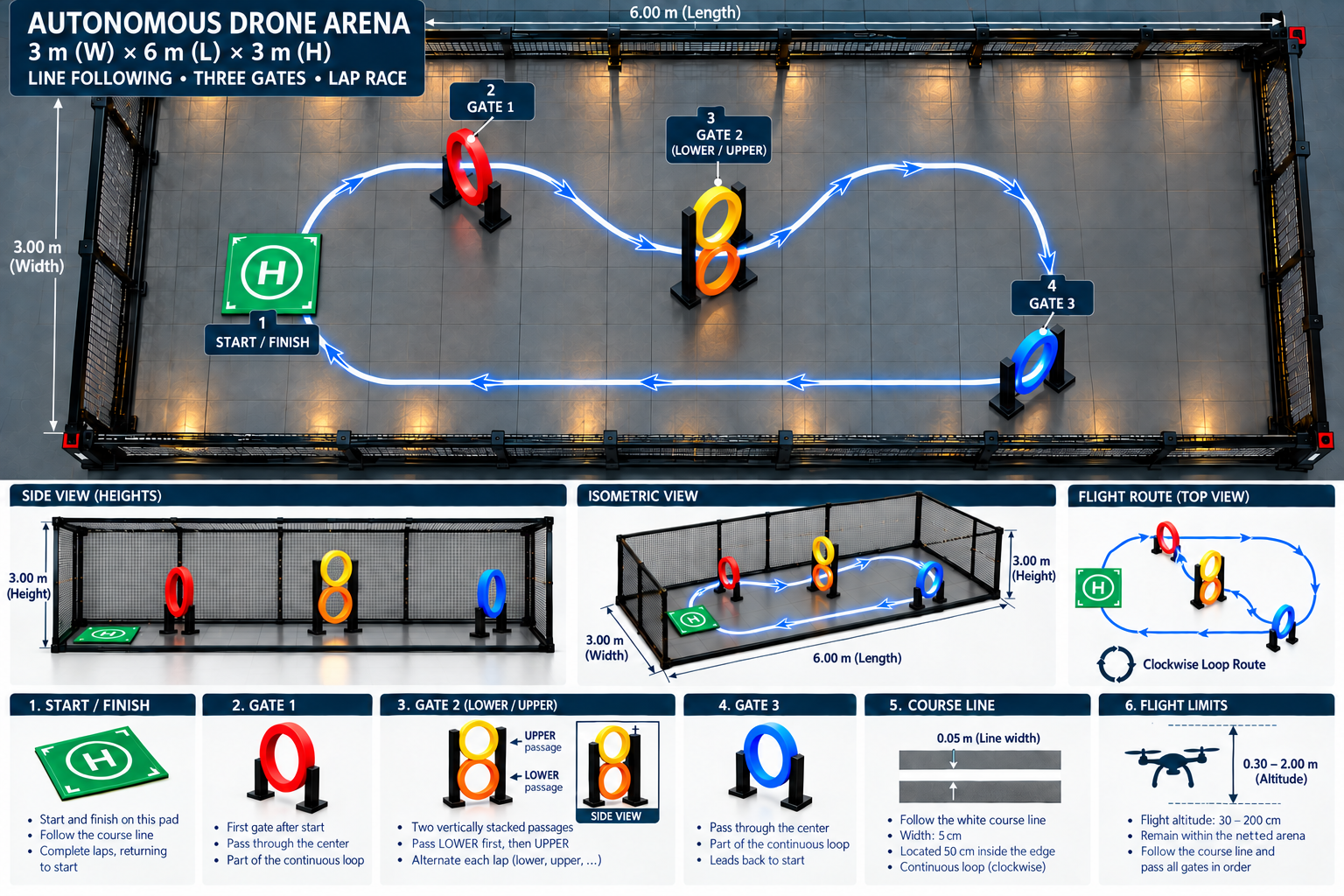
The drone follows a 5 cm line inside the protected field and flies at an altitude of 30–200 cm. It uses only its own sensors and software after take-off; external guidance, data transmission and parameter changes are prohibited.
Dimensions are measured with the propellers unfolded. Propeller guards are mandatory, and an emergency-stop remote may be used only to stop flight. The operator and assistant must wear protective gloves and goggles. Flight preparation includes a two-minute test flight and one three-minute technical timeout per run, available only before take-off and before the run clock starts.
Flight preparation and safety
Fly only inside the enclosed safety area with secure propeller protection and healthy, securely mounted batteries. Keep people outside the cage while drones are airborne. Follow the referee’s instructions for emergency shutdown and authorised recovery.
Participation implies acceptance of the official rulebook. All teams, mentors, and students are expected to read, understand, and comply with the rules.
Competition Setup
From take-off to a clean lap
Each run lasts three minutes from autonomous take-off. A collision or landing restarts the current flight’s lap count; the run clock continues and earlier valid flight results remain saved.
Prepare and launch autonomously
Place the drone at the referee-designated start. Use the 30-second autonomous-mode setting period, then command take-off. Once airborne, the drone navigates without directional input from the team.
Follow the course line
Follow the 5 cm line in the announced direction. Stay within the permitted altitude band and avoid contact with the gates, obstacles and enclosure.
Alternate the central gate passage
Pass Gate 2 once per lap: use the lower passage on the first lap, the upper passage on the next, then continue alternating. A lap with the wrong Gate 2 passage does not count.
Complete consecutive laps
Cross the start point after following the line and completing the gates to record one lap. Build the longest uninterrupted sequence within the remaining time.
Recover safely and preserve the best result
After a collision or landing, wait for the propellers to stop and obtain referee permission before retrieval. Relaunch from the start if safe. Only the active lap counter resets; separate flights are never added together.
How the result is calculated
The category measures consecutive laps, not cargo or gate bonus points. Line-following drones rank in the first group; autonomous drones that cannot follow the line rank below them.
| Criterion | Result |
|---|---|
| One valid circuit | 1 lap |
| Run score | Highest uninterrupted lap count from one flight within the run |
| Team score | Highest of the three official run scores |
| First tie-break | Second-best run score |
| Further tie-breaks | Shorter final-lap completion time in the best run, then lower inspected mass, then Head Referee decision or drawing of lots |
Resets, invalid laps and stopped runs
Collision, landing or wrong gate passage
Collision or ground contact resets the active flight’s lap counter and requires a safe relaunch from the start. Earlier valid flight records remain. Using the wrong Gate 2 passage invalidates that lap only.
Clock continuesExternal control after take-off
Remote guidance, external data transmission or parameter changes make the run score zero; repetition leads to category disqualification. Taking the drone outside the area after the run starts also makes that run score zero.
Run score 0Unsafe flight or detached parts
Detached parts or leaving the track end the run; valid earlier flight results are retained unless a separate sanction applies. Speed or altitude violations receive a warning, with the run ended if repeated. Missing propeller guards prevent flight approval.
Safety stop / inspection failureCompetition Rules & Guidelines
Review the official competition rules, evaluation criteria, project requirements and submission guidelines before preparing your project.
Participation implies acceptance of the official rulebook. All teams, mentors, and students are expected to read, understand, and comply with the rules.